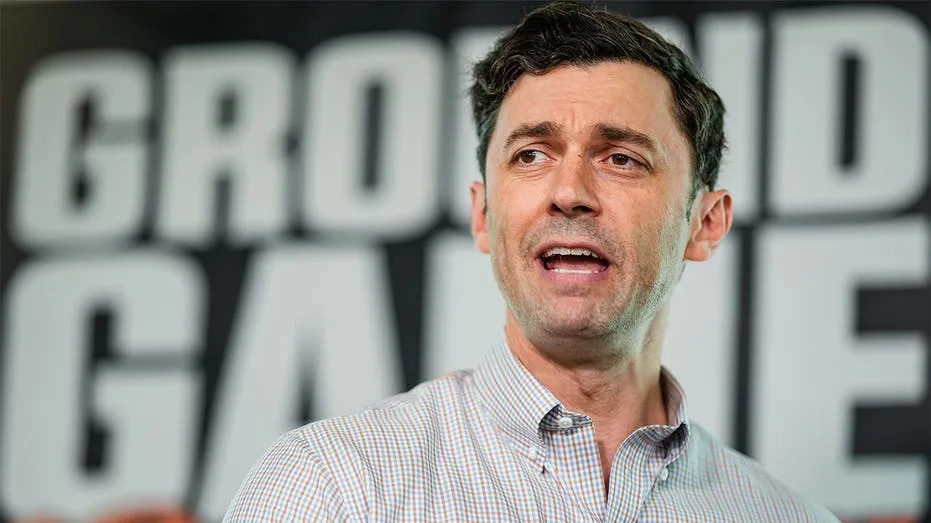
In 2019, while preparing to run for the U.S. Senate, then-candidate Jon Ossoff, a Democrat representing Georgia, indicated his support for legislative initiatives aimed at providing reparations for the societal damages stemming from slavery and other injustices faced by Black Americans.
During a radio interview that year, Ossoff articulated that the discussion around reparations should focus on the extent of governmental obligation, rather than questioning the principle itself.
There is a debt unpaid. I think it is a very, very difficult question: how to pay it.
Ossoff told the local radio host, who then interjected, "But see, that should be the question — not if it should be paid." Ossoff concurred, responding, "Exactly."
Now, seven years later, as Senator Ossoff navigates a re-election campaign anticipated to be highly competitive nationwide, these past comments have re-emerged, prompting inquiries into his current perspective on the government's role in addressing social inequality.
Progressive Advocacy for Reparations
In previous years, prominent progressive organizations, including the Movement for Black Lives (M4BL) and the Democratic Socialists of America (DSA), have incorporated reparations into their core policy agendas.
The DSA articulated its position in 2019, stating, "Despite the elimination of Jim Crow and openly discriminatory laws against Black Americans a half century ago, Black people and the Black community as a whole still suffer economic, political and social discrimination and inequality." The organization further noted, "Formally equal treatment on the basis of inequality means the perpetuation of inequality. Reparations for these and other offenses is a current topic of significant discussion during this election."
Although not affiliated with the DSA, Ossoff had expressed his willingness to back legislation designed to study the issue of reparations.
Legislative Efforts and Historical Context
During his 2019 podcast appearance, Ossoff referenced legislative efforts by Senator Cory Booker to establish a commission dedicated to examining methods for redressing historical grievances and settling what he termed "the debt never paid."
Ossoff specifically recalled the unfulfilled promise of "Forty acres and a mule," a reference to an 1865 pledge made by Union General William Sherman to redistribute land to formerly enslaved people.
Senator Booker's proposal, which never became law, has been reintroduced multiple times, most recently in 2025, and is currently under consideration by the Senate Judiciary Committee. It is notable that Senator Ossoff has not formally sponsored this legislation.
Constitutional Considerations and Judicial Precedent
Historically, conservatives have voiced opposition to reparations, often contending that such measures could constitute a form of positive discrimination or preferential treatment based on race, which they argue conflicts with the principles of the 14th Amendment.
The Supreme Court addressed aspects of positive discrimination in its landmark 2023 ruling in Students for Fair Admissions v. Harvard, a case that scrutinized affirmative action policies. The Court examined whether universities like Harvard had violated the 14th Amendment by implementing different admissions standards influenced by race, thereby favoring minority applicants.
In its decision, the Court asserted, "The student must be treated based on his or her experiences as an individual — not on the basis of race." The ruling continued, "Many universities have for too long done just the opposite. And in doing so, they have concluded, wrongly, that the touchstone of an individual’s identity is not challenges bested, skills built or lessons learned by the color of their skin. Our constitutional history does not tolerate that choice."
Current Campaign and Unanswered Inquiries
Ossoff’s office has not yet responded to inquiries regarding whether he foresees potential constitutional challenges to reparations legislation or if his position on the matter has evolved since 2019.
Having secured the Democratic primary nomination earlier this year, Senator Ossoff is now preparing for the general election on November 3, where he will compete against Representative Mike Collins, a Republican from Georgia. Ossoff initially won his Senate seat in 2021, defeating then-Republican incumbent Senator David Perdue with a narrow margin of 50.6% to 49.4%.