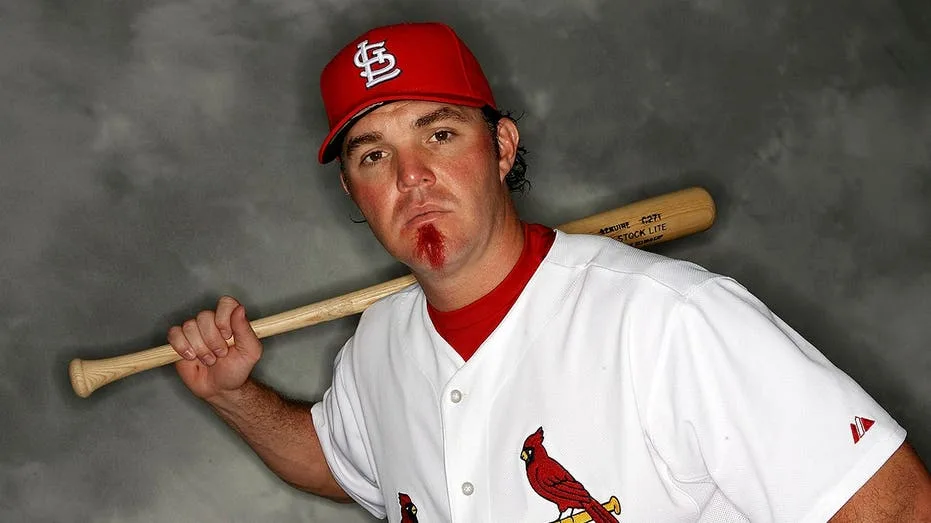
In 2018, an MRI for back pain revealed a far more critical issue for former Major League Baseball star Scott Spiezio. Following the scan, Spiezio emerged visibly jaundiced, a symptom of his liver failing after many years of struggling with alcoholism.
Then 47 years old and a two-time World Series champion, Spiezio was informed by doctors that his chances of survival were only 20%. He was told he needed to abstain from alcohol for six months to qualify for a life-saving liver transplant, a challenge he initially doubted he could meet.
"I didn't think that I'd be able to do it. I went from a guy that never drank alcohol to thinking I don't know if I can go six months without drinking to save my own life," Spiezio shared.
From Childhood Dream to World Series Glory
Spiezio's father, Ed, also a two-time World Series champion, played nine seasons in MLB. Scott recalled his father telling him from a young age, "You’re going to be better than me."
"As soon as he was born I knew he was going to be a ballplayer," Scott’s mother, Verna Spiezio, stated in the upcoming documentary, "Spiezio."
Ed Spiezio added, "I was praying for a son." He was determined his son would become a baseball player.
Scott began switch-hitting at age three. The two spent countless hours together, working towards the goal of reaching the major leagues. Their basement was equipped for drills, and every youth practice concluded with a specific scenario: a 3-2 count, two outs, bases loaded, down one run in the bottom of the ninth inning of Game 7 of the World Series. In high school, their routine included 6 a.m. gym sessions for batting practice and workouts before school.
"I think for a long time that's what my dad thought, and I did too. That (baseball) was my purpose in life. (It) was to be a better baseball player than him and to win championships," Scott said.
Scott Spiezio achieved these goals. Beyond winning championships, he delivered one of the most memorable home runs in Angels franchise history.
During Game 6 of the 2002 World Series, with the Angels trailing the San Francisco Giants 3-2 in the series, Spiezio stepped to the plate in the bottom of the seventh. The Angels were down 5-0 with two runners on, their season hanging precariously. This was the exact high-pressure moment he had simulated countless times throughout his life.
Giants manager Dusty Baker brought in reliever Felix Rodriguez to quell the threat. Rodriguez quickly got ahead 1-2 in the count, putting Spiezio in a difficult position. However, Spiezio battled, fouling off pitches and drawing balls to work the count full to 3-2, a familiar situation. He then connected with a fastball, sending it into the right-field stands.
"Everything was in slow motion. I was running to first, I was watching the ball, I was literally praying, like, God, please push this out, like let this go," Spiezio recalled. "And then I heard the loudest noise in my life."
Spiezio’s home run narrowed the deficit to 5-3, igniting an Angels comeback that led to a 6-5 victory in Game 6 and ultimately, their first World Series title in Game 7.
This heroic moment propelled Spiezio into the spotlight, leading to what he described as his "ego" taking over. For Spiezio, "ego" is an acronym: "edging God out."
"People tell you how great you are and you start believing. And for me, ego stood for edging God out, and I started edging him out and started believing the hype and started drifting a little bit as a person," Spiezio explained.
Post-2002 World Series, Spiezio was in high demand. David Letterman wanted him for his Top 10 List, and he appeared on shows hosted by Jay Leno and Carson Daly. His band played concerts for crowds of 1,500 people. His hometown of Morris, Illinois, honored him with billboards, a key to the city from the mayor, recognition at his high school, and a street named Scott Spiezio Drive. He was, as he put it, at the top of the world.
The Descent into Addiction
After the 2003 season, Spiezio left the Angels and signed a three-year, $9 million contract with the Seattle Mariners. During spring training, while playing third base, he tripped on the pitcher's mound at full speed trying to catch a pop-up, severely injuring his back. He blew out his thoracic T6 and T7 discs, with doctors warning that another collision could lead to paralysis. This was Spiezio's first serious injury, marking the beginning of a troubling period.
"When I got hurt, kind of started feeling sorry for myself and drifted from God. More like, ‘Why I've done everything you wanted me to do? Why am I being punished?’ And instead of turning to him, I turned to alcohol," Spiezio recounted. "They told me I might be paralyzed. I might not play again, and I got depressed, anxious and all these things that I thought people made up."
In Seattle, a new city without an established support system, and grappling with a severe injury, Spiezio felt adrift. "I'm with a new team. I went out to try to fit in, and I ended up drinking too much, and before you know it, that first night out turned into an everyday thing, and I was on a roller-coaster ride of becoming physically addicted to alcohol."
He transformed from someone who rarely took over-the-counter pain medication to drinking daily. Despite previously receiving community awards and working with DARE, he unknowingly became an alcoholic. While maintaining a belief in God, Spiezio admitted to straying from his faith during these struggles, spending thousands of dollars nightly on bottle service.
His relationship with his father deteriorated as his drinking escalated. He had an affair with his future second wife, leading to a divorce from his first. He also began using cocaine recreationally. The situation spiraled, culminating in a confrontation at his parents' house where his father urged him to stop. As Scott attempted to leave, he pushed his father, leading neighbors to call the police. His children witnessed the incident. After that night, he stopped speaking to his father.
Spiezio was released by the Mariners during the second season of his contract, which he called a reprieve. The following offseason, he married his second wife. However, none of his friends attended the wedding. Spiezio later revealed he was consuming nearly a handle of vodka daily, indicating how much he had changed.
In 2006, the St. Louis Cardinals offered him a minor league invitation to spring training. This opportunity revitalized him, returning him to his father's former team and his hometown. Despite the ongoing estrangement, he wore his father's No. 26. He experienced a resurgent season with the Cardinals, batting .272 with 13 home runs and 52 RBI, playing various positions, and contributing significantly to their World Series victory.
This second World Series win was different. He couldn't celebrate with his father as he had in 2002. While he achieved the same milestone as his dad, the moment couldn't be shared. The fanfare was also subdued; there were no high school parties or extensive newspaper coverage. His reputation had changed, preventing the same level of celebration. His relationship with his father had deteriorated so much that he questioned if he would even be invited to his funeral.
Some bonds, he realized, are more significant than baseball.
On Opening Day 2007, during the World Series ring ceremony for the Cardinals, the team arranged a special surprise: Ed Spiezio was to present Scott with his ring. Ed, who still hadn't spoken to Scott since their confrontation, hesitated but ultimately decided to go.
"I didn’t feel I should go down there, but for this event I did," Ed stated.
As the Cardinals announced Ed's role, Scott was overcome with emotion.
"The Cardinals brought my dad back without me knowing to give me my ring in 2007. The first time in history and only time in history that a father and son have won with the same organization. They called him up and presented my ring to him and then called me up, and he presented my ring to me, and we hugged and that was the prodigal son moment that turned everything around," Scott recounted.
Ed remembered that there wasn't a dry eye in the stadium. Scott called it a pivotal moment, wishing he had gotten sober then, but grateful to have his father back in his corner. Later that year, Scott spoke at Christian Day at Busch Stadium, with his father in attendance.
"I think he started realizing that there was a greater purpose and, uh, we started opening up to each other after I spoke at Christian Day at Busch Stadium with the Cardinals. And he told me at that moment, we hugged, and he said, ‘I'm proud of you. Like, I couldn't be prouder of you,’" Scott said.
Despite this reconciliation, his alcohol abuse worsened. He drank from water bottles in the dugout during games, playing while intoxicated. He estimated his blood alcohol level during games was around 0.20, well above the legal limit of 0.08. He drank to combat withdrawal shakes and used cocaine to stay awake.
Spiezio eventually collapsed in front of Cardinals trainers, who sent him to an outpatient rehab facility near St. Louis. The facility's proximity to a place where he was recognized proved detrimental, as he refrained from sharing in group sessions and simply waited for his time to conclude. He checked the box, returning to the Cardinals' lineup 28 days later, but remained an addict and alcoholic.
After the 2007 season, Spiezio was involved in a hit-and-run and subsequently went to rehab in Tucson, Arizona. He rejoined the team in 2008 but was released after an arrest warrant was issued. The Atlanta Braves signed him to a minor league deal, but he retired from baseball in 2008, wanting to stay closer to home. Upon retirement, he immediately plunged back into alcohol and cocaine.
He divorced his second wife in 2010, consuming one to two handles of vodka daily and spending thousands weekly on cocaine. From 2007 to 2016, Spiezio entered 11 different rehab facilities, spending hundreds of hours in AA meetings and with counselors. He eventually ceded control of his remaining property and money to his parents.
"(My parents) strung me along to bring me food and would help me. They saved my property so I had somewhere to live. Otherwise, I would have spent everything and thrown everything away. And yet I was smart enough to give – I trusted them so much that I gave them power of attorney and I got rid of all my cars, got rid of all my credit cards, got rid of my checks, and let them do everything, so I wouldn't have access to money," Spiezio explained.
At one point, Spiezio reached such a low point that he harbored a death wish.
If you or someone you know is having thoughts of suicide, please contact the National Suicide Prevention Lifeline at 1-800-273-TALK (8255).
"I remember the cops were called," Pastor Kevin Donoho of Crossbridge Community Church stated in the documentary. "And basically (Scott) had taken off on foot, and he was out in the field. The cops are out looking for him and basically they see him. And he said, ‘I’m going to run at them so they shoot me, and they can just put an end to all of this. I just thought, ‘That’s as low as it gets.’"
Spiezio was overwhelmed with guilt and shame for disappointing his children, his community, his parents, and squandering his platform. For a decade, his life revolved around drugs and alcohol, making him hesitant to show his face.
A Miraculous Turnaround and New Purpose
For years, Spiezio would ask God for help, only to relapse into old habits. His 2018 MRI, which revealed his liver failure, served as a stark wake-up call.
"I would ask God for help, and he would help me, and then I'd take the wheel back. And then finally, I think he was like, ‘Hey man, you're not getting this. I'm going to have to wake you up.’ And I ended up getting jaundice," Spiezio said.
With his liver failing and only a 20% chance of survival, the six-month sobriety requirement for a transplant seemed insurmountable. "I went from a guy that never drank alcohol to thinking I don't know if I can go six months without drinking to save my own life. I just cried out to God. I said, ‘God, take away my cravings.’ And that was April 6, 2018," Spiezio recalled. "From that day on, I've had zero cravings. When I see alcohol, I get physically ill when I see it. I feel like I'm going to throw up."
Believing this was his last chance, Spiezio committed to following God's will. Every few weeks, he returned to the hospital to have two liters of fluid drained from his abdomen. Gradually, he began to feel better.
When he visited Northwestern Hospital for the fourth time, doctors were astonished by his progress.
"By the fourth time I went in, they read my scans, they looked at my blood work and said, ‘We don't know how to explain it, but your liver is normal, and your blood work is great. We've never seen anything like this before. All we can say is somebody upstairs is looking out for you,’" Spiezio shared. "And I knew that that God had performed a second miracle on me."
Following this miraculous recovery, Spiezio began with simple tasks, like gathering sticks in his yard to mow the lawn and creating a burn pile. These small actions motivated him to re-engage with people. He deepened his relationship with God, attending church more frequently. He asked Pastor Donoho if he could work at the church and began cleaning the office complex. He started reading the Bible, reconnected with friends, and felt a calling to share his story.
Spiezio, who once made over $16.5 million playing baseball, now lives month to month, yet he describes himself as happier than ever. His journey is chronicled in the documentary "Spiezio," released on September 10, and his memoir, "The Hardest Comeback," published in July.
Regarding his memoir's title, Spiezio explained, "I thought of a bunch of different titles for the book and one of them was ‘It's never too late,’ and ‘Never Give Up.’ Like there was all sorts of titles. We went with ‘The Hardest Comeback' because we wanted people to realize how hard it really was. I had the comeback with the Game 6 home run in the World Series, but the hardest comeback was this by far."
For those struggling with addiction or mental health, Spiezio offers a message of hope.
"I want people to know that there's hope, if you're vulnerable, and you let people in your life that that can steer you in the right direction and can hold your hand while you're going through stuff, you have to be willing to want to stop. And I can tell you from a guy that thought I couldn't stop drinking in order to save my own life to a guy that wonders why in the world I ever put any of that stuff in my system," Spiezio affirmed. "Life is so much better."
Today, Spiezio operates a baseball facility, providing one-on-one lessons to children. He openly shares his faith and is deeply involved with his church, speaking at schools about the dangers of drugs and alcohol. He is actively repairing relationships with his four children, aged 26, 24, 22, and 11, with the youngest teaching him how to fish.
He has returned to his hometown, crediting the community for helping him reconnect with his roots and his true identity. His joy now comes from helping others.
"I had millions and millions of dollars. Now, I live month to month. But I'm happier now than when I had seven cars and three houses and was hanging out with all these, you know, famous people. I have true joy now because I know how the story ends. And the biggest thrill for me is when people tell me that, you know, after talking to you I've saved my marriage," Spiezio expressed. "Or I've restored my faith in God or have 12 months sober or five years sober or 30 days sober. There's nothing like getting those texts where people are like, thank you for taking the time."
He concludes with a powerful message: "It's never too late. I always say as long as you got a breath, you got a pen to write a great ending. As long as you got a pulse, you got a purpose. It's never too late to get sober. It's never too late to mend broken relationships."