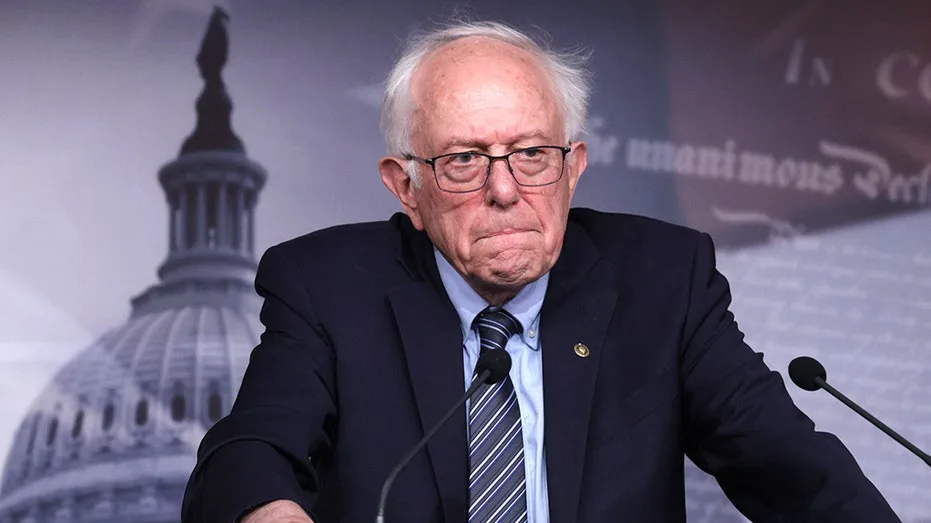
Senator Bernie Sanders, an independent from Vermont, is pressing Democratic leaders to implement restrictions on super PAC participation in the party's primary elections. Sanders contends that affluent external groups exert excessive power over who becomes the Democratic nominee.
On Sunday, Senator Sanders took to social media to specifically name the American Israel Public Affairs Committee (AIPAC) in his critique of outside expenditures in Democratic primaries.
"It is insane that the Democrats allow super PACs like AIPAC to spend millions in their primaries — only for those same special interests to help elect Republicans in the general election," Sanders posted. "My message to Democratic leaders: Ban super PACs from Democratic primaries NOW."
Sanders also shared a letter dated August 8, addressed to Senate Democratic Leader Chuck Schumer of New York, House Democratic Leader Hakeem Jeffries of New York, and Democratic National Committee Chairman Ken Martin.
Concerns Over Outside Spending and Influence
In his correspondence, Sanders detailed that AIPAC and its associated entities reportedly spent over $30 million in Michigan's Democratic primary, aiming to defeat Dr. Abdul El-Sayed. He further claimed the organization intends to allocate tens of millions more to support Republican Mike Rogers in the general election.
Sanders' criticism extended beyond AIPAC, encompassing a broader range of outside spending. "AIPAC is not the only super PAC or outside organization playing this role. Corporate super PACs — including crypto, AI and online betting special interests — have already spent a record $517 million this election cycle, shattering the record set in 2024," Sanders wrote.
His concerns centered not only on the sheer volume of external spending but also on the motivations of groups that attempt to sway Democratic primaries and subsequently back Republican candidates if their preferred Democrat is unsuccessful.
"What is particularly obscene is not only the outrageous amount of money coming into Democratic primaries from billionaire-funded super PACs, but the reality that these special interests have no particular desire to see Democrats win," he stated. "It is absurd that they spend tens of millions of dollars to try to determine who the Democratic nominee is and, if they fail, then proceed to support the Republican candidate in the general election."
AIPAC's Stance and Affiliations
According to its official website, AIPAC asserts that it supports pro-Israel candidates across both major political parties.
"AIPAC is a grassroots membership organization with a PAC that supports pro-Israel Democratic and Republican candidates for Congress," its website states. "The AIPAC PAC is funded by individual American citizens who care deeply about helping elect leaders who want to strengthen the partnership between the United States and Israel."
AIPAC is also affiliated with the United Democracy Project, a super PAC that, as noted on its website, aims to help defeat "detractors — both Republicans and Democrats — of the U.S.-Israel relationship."
Calls for Systemic Reform
Beyond the immediate call for a primary ban, Sanders reiterated his long-standing advocacy for a constitutional amendment to overturn the Citizens United Supreme Court decision and for the implementation of public financing for elections.
He emphasized that the Democratic Party possesses the authority to enact such a ban immediately. "Right now, the Democratic Party has the power to prohibit super PACs from participating in its primaries. That can be done. That must be done," Sanders asserted. "I urge you to take action and make clear that the Democratic Party will no longer maintain this corrupt system."
Sanders concluded his message by stating, "While there are ideological differences of opinion within the big tent of the party, I would hope that we can all agree that Republican special interests should not play a role in determining the outcome of Democratic primaries. The time to act is now."
In May, Senator Sanders, alongside Representative Summer Lee, a Democrat from Pennsylvania, introduced the Abolish Super PACs Act. This proposed legislation seeks to cap individual contributions to super PACs at $5,000, effectively dismantling their current operational structure.