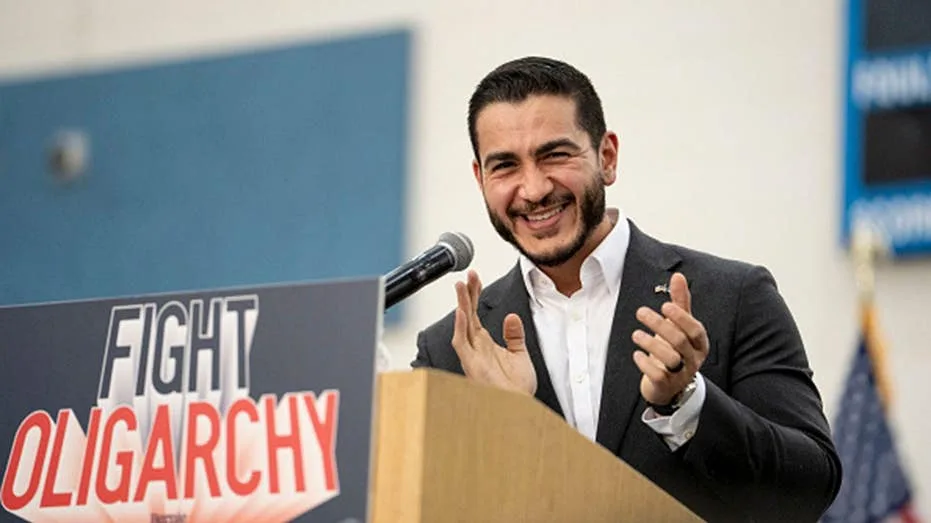
Abdul El-Sayed, the Democratic nominee for Michigan's U.S. Senate seat, is drawing scrutiny following the emergence of past writings that present broad critiques of conventional masculinity and American sports culture.
In a blog post from 2021, El-Sayed specifically targeted American football. This particular entry was penned in the aftermath of former Las Vegas Raiders coach Jon Gruden's departure due to leaked emails.
Within his post, the candidate, known for his progressive views, articulated a strong critique of male sports culture. He asserted that "the toxic masculinity at the heart of America’s most popular sport, and men’s sports culture more generally, is way deeper than a few emails or a Jay-Z turnaround."
El-Sayed, who played as a starting center during his high school football career at Andover High School, drew upon his own experiences to argue that traditional athletic environments can foster prejudice. While he acknowledged feeling a sense of liberation on the field, El-Sayed stated that "on the sidelines and in the locker room, I was fed a hefty dose of the worst kinds of racist taunting." He further claimed that within men’s sports, "racism, misogyny, and homophobia were lingua franca." He also directly criticized the National Football League, accusing the organization of "deep-rooted racism."
Advocating for a Different Masculinity
Instead of embracing traditional notions of athletic toughness, the Democratic nominee proposed a more nuanced, progressive interpretation of manhood, drawing inspiration from popular culture.
El-Sayed encouraged coaches to move away from conventional displays of grit and instead emulate the lead character from the comedy series "Ted Lasso." He commended the fictional soccer coach, noting that "Ted cries. He talks through his problems. He encourages his players. He bakes biscuits for his boss. He smiles ... like, all the time."
Global Sports and Political Ideology
His perspectives on sports culture extend beyond U.S. borders. In another blog entry from 2021, El-Sayed explicitly connected his athletic preferences to his political ideology. He wrote, "European soccer also speaks to my politics. Compared to American sports leagues, the sport is also deeply egalitarian."
These resurfaced posts highlight a significant difference between El-Sayed's academic discussions on gender and his more recent campaign efforts. On the campaign trail, he has sought to connect with younger male voters by emphasizing his own history in high school wrestling and football.
As El-Sayed prepares to face Republican Mike Rogers in the general election, having secured the Democratic nomination over Rep. Haley Stevens, these past statements may require explanation for working-class Midwesterners who may prioritize football over such progressive analyses.