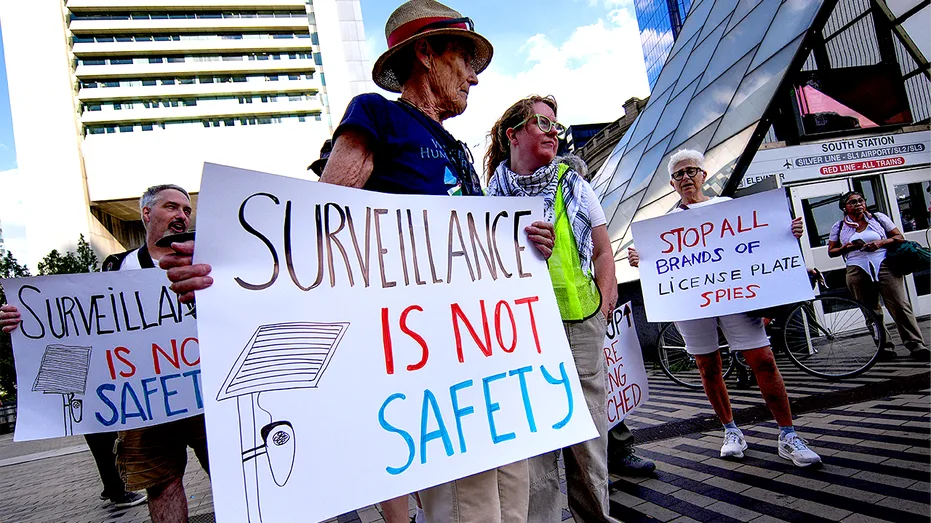
Across the United States, residents are actively resisting the proliferation of neighborhood surveillance cameras, with actions ranging from destroying camera poles to strategically placed signs obstructing lenses. These automated license plate readers (ALPRs), commonly known as Flock cameras, are deployed by law enforcement agencies in numerous states to collect vehicle data, assisting in criminal investigations. However, their presence has sparked significant privacy concerns and fears of potential misuse among community members.
Growing Resistance to Surveillance Technology
The debate has resonated in Washington D.C., where Senator Bernie Sanders (I-Vt.) has proposed a complete prohibition on the technology. Concurrently, Representative Tim Burchett (R-Tenn.) has campaigned to halt federal funding for local installations of these devices. Public sentiment is also reflected in individual concerns. Carl Gunn, a resident, voiced his apprehension, stating, "My biggest concern is I don’t want people to know where I go and when I go. That’s my business, not anyone else’s."
Beyond legislative efforts, Flock cameras have been targets of vandalism and theft in various states, including New York, Minnesota, California, and Illinois.
Flock Safety's Call for Accountability and Compromise
Despite these challenges, Garrett Langley, CEO of Flock Safety, views the issue as complex, emphasizing the critical role the technology plays in enhancing safety. Speaking recently, Langley highlighted the technology's contributions, noting its assistance in over a million law enforcement investigations and the successful location of more than 10,000 missing individuals.
Flock Safety's official website describes its tools as "technology that helps communities deter crime, respond to emergencies, and investigate safety incidents," asserting a commitment to balancing public safety with individual privacy. Langley affirmed the company's dedication to ensuring the ethical use of its technology. This includes recommending a seven-day limit for data retention and implementing measures to hold accountable any individuals who misuse the system.
Today, it is too often that in Flock and in other technologies, there’s no regulation. There’s no accountability, and we think that’s wrong.
Langley further detailed changes implemented by the company, stating, "We announced changes that required auditing, that required using our audit assistance tool, which detects abnormal behavior." He urged state regulators to shift their focus "less on banning this type of technology and more [on] holding our law enforcement community accountable." This call underscores a desire for a regulatory framework that ensures responsible use rather than outright prohibition.